Category: Uncategorized

  • The Public Mental Health Restoration and Kirkbride Reestablishment Act of 2025

    Draft Bill

    The Public Mental Health Restoration and Kirkbride Reestablishment Act of 2025


    Section 1. Short Title

    This Act may be cited as the “Kirkbride Reestablishment Act of 2025.”


    Section 2. Congressional Findings

    Congress finds the following:

    1. The deinstitutionalization and privatization of mental health services, accelerated during the 1980s, contributed to the closure of state psychiatric hospitals and the reduction of long-term, publicly funded mental health care.
    2. The absence of sufficient public mental health facilities has resulted in a national crisis, with individuals suffering from profound mental illness often left untreated, homeless, incarcerated, or otherwise without adequate care.
    3. Historically, the “Kirkbride Plan” hospitals, while imperfect, were designed to provide humane, long-term treatment in therapeutic environments.
    4. The restoration of publicly funded, state-administered mental health hospitals, updated to modern medical standards, is necessary to address today’s widespread crisis of untreated severe mental illness.

    Section 3. Purpose

    The purposes of this Act are to:
    (a) Reverse the privatization of mental health services by restoring federal and state responsibility for long-term care.
    (b) Reestablish and modernize state-operated public mental health hospitals modeled on the Kirkbride principles of structured, therapeutic environments.
    (c) Ensure the availability of involuntary and voluntary commitment options for individuals suffering from profound mental illness who are a danger to themselves or others.
    (d) Provide sustainable federal funding for construction, staffing, and operation of public mental health hospitals.


    Section 4. Reversal of Privatization Measures

    (a) Repeal of Block Grant System — The Community Mental Health Block Grant program established under the Mental Health Systems Act of 1980, as modified in subsequent amendments under the Reagan administration, is hereby repealed.
    (b) Restoration of Federal Oversight — Federal funding for state mental health systems shall be directly administered by the Department of Health and Human Services (HHS) through a new Office of Public Mental Health Facilities.
    (c) Termination of Private Contracts — No federal funds may be used to contract with for-profit entities for the operation of long-term psychiatric facilities.


    Section 5. Establishment of Kirkbride Public Mental Health Hospitals

    (a) Mandate for States — Each state shall, within 10 years of enactment, establish at least one Kirkbride-modeled public mental health hospital for the treatment of individuals with profound or chronic mental illness.
    (b) Design Standards — Hospitals shall incorporate the following principles:

    1. Therapeutic architecture with natural light, outdoor space, and communal areas.
    2. Adequate residential capacity to provide long-term care.
    3. Separation of patients by level of need, gender, and risk category.
    4. Integration of modern psychiatric, medical, and rehabilitative services.
      (c) Federal Funding — The federal government shall provide 80% of construction and operational costs; states shall provide 20%.

    Section 6. Involuntary Commitment Standards

    (a) Revised Legal Standard — States shall adopt uniform criteria for involuntary commitment, allowing for treatment of individuals who:

    1. Pose a danger to themselves or others; or
    2. Suffer from profound mental illness impairing their ability to function in society.
      (b) Due Process Safeguards — Individuals subject to involuntary commitment shall be guaranteed timely judicial review, access to counsel, and periodic reassessment of their condition.

    Section 7. Workforce Development

    (a) Recruitment and Training — A national program shall be established to recruit and train psychiatrists, psychologists, nurses, social workers, and support staff for Kirkbride hospitals.
    (b) Loan Forgiveness — Mental health professionals who serve a minimum of five years in a Kirkbride hospital shall be eligible for federal student loan forgiveness.


    Section 8. Funding Authorization

    (a) Appropriations — There is authorized to be appropriated $50 billion annually for fiscal years 2026–2036 to carry out the purposes of this Act.
    (b) Priority Grants — Initial priority grants shall be awarded to states with the highest rates of untreated severe mental illness, homelessness, and incarceration due to psychiatric disorders.


    Section 9. Reporting and Oversight

    (a) HHS shall submit an annual report to Congress on the progress of hospital construction, admissions, outcomes, and effectiveness of treatment.
    (b) An independent oversight commission shall monitor compliance with humane standards and patient rights.


    Section 10. Severability

    If any provision of this Act is held invalid, the remainder shall not be affected.

  • OPINION: A REAL take on the Meduro arrest from a REAL Venezuelan

    Jesus Belandria via Facebook

    As a Venezuelan, I am extremely happy this happened.


    I am tired of replying all day to people with comments on the matter so I am just gonna copy and paste one of the most recent replies I gave.


    It is a very nuanced issue. The “legal ways” us mortals think of in the U.S do not apply at a global scale when talking about these regimes. The ICC, UN, etc have been disregarding our issue because for one the main prosecutor of the ICC was found to be linked with maduro. They have connections everywhere and have been avoiding justice. All legal mechanisms have been exhausted and taking this to congress would’ve ended up in the same given that venezuela has lobbyists buying influence in congress. The guaido situation was never explained and he was not just some random guy; he was the head of parliament and was constitutionally he would have had to become president temporarily if the constitutional order was lost, which happened after maduro installed a parallel parliament after the opposition had won a huge majority in said parliament in 2016. Then they started capturing parliament members forcing them all to go into exile and that’s just part of it. Now, in 2024 he was forced by international pressure to allow for real presidential elections and the “opposition” won by a huge margin even though 1/3 of the population has left the country and that group was not even able to vote. Maduro claimed victory, did not show evidence and again, forced the winner into exile.


    Now that is just explaining why it is not a situation of the U.S attempting to install a random person.


    The drug allegations are 100% true, but it is not a cartel like we know them, rather a web of different crime enterprises that help one another and they sit on top. Venezuela is being used as a hub for everything illegal in south america, with legal international airports where criminals are allowed to transport illegal stuff through ally-criminal countries, a central bank that can just money launder as they please. China has been installed in venezuela depleting our gold mines with illegal slave mining, then sending the gold to the middle east to be “cleaned” and introduced into the legal market without reporting said gold. There is so much stuff I would be here all night typing.


    But let’s imagine you’re 100% right and the US just wants the oil.
    Do you think china, russia, iran, etc are just in venezuela because they want our recipe for arepas? Come on…

  • The Right to Repair and Product Durability Act of 2026

    A BILL
    To secure the right of owners and independent repair providers to repair and maintain products; to prohibit anti-repair design and software restrictions including parts pairing; to deter planned obsolescence; to establish minimum durability and warranty standards for covered products; and for other purposes.

    SECTION 1. SHORT TITLE.

    This Act may be cited as the “Right to Repair and Product Durability Act.”

    SECTION 2. FINDINGS AND PURPOSE.

    (a) Findings. Congress finds that—

    1. Repair restrictions commonly include limits on parts, tools, and documentation; software locks; and design choices that unnecessarily impede repair. Federal Trade Commission+1
    2. Repair restrictions harm consumers, small businesses, government entities, and competition, and increase waste. Federal Trade Commission+1
    3. A central modern barrier to repair is the use of software-based pairing/serialization and re-authentication requirements that can degrade functionality after otherwise legitimate repairs. The Repair Association+1
    4. Sound public policy favors durable, maintainable products and access to repair on fair and reasonable terms. European Commission+1

    (b) Purposes. The purposes of this Act are—

    1. to guarantee access to parts, tools, documentation, diagnostics, calibration, and firmware needed for repair;
    2. to prohibit parts pairing and software restrictions that block lawful repair; The Repair Association+1
    3. to deter and penalize planned obsolescence and intentional design-to-fail practices;
    4. to establish strong minimum warranties and durability expectations for covered goods; and
    5. to provide robust enforcement via the FTC, State Attorneys General, and private actions.

    TITLE I — DEFINITIONS

    SEC. 101. DEFINITIONS.

    In this Act:

    1. “Covered product” means any consumer product or commercial product primarily sold or leased in interstate commerce, including electronics, appliances, agricultural equipment, powered tools, medical durable equipment (non-implantable), and similar goods, as designated by the Commission by rule.
    2. “Manufacturer” means any person or entity that manufactures, assembles, imports, or sells a covered product under its brand.
    3. “Owner” means any individual or entity that lawfully owns or leases a covered product, including subsequent purchasers.
    4. “Independent repair provider” (IRP) means any person or business engaged in the diagnosis, maintenance, or repair of covered products that is not controlled by the manufacturer.
    5. “Documentation” includes service manuals, schematics, boardviews, exploded diagrams, test procedures, diagnostic trees, error code definitions, and calibration procedures sufficient to restore full functionality.
    6. “Parts pairing” means any hardware or software design in which a replacement part (including subcomponents) is cryptographically or digitally bound to a device such that replacement results in reduced functionality, warnings, lockouts, or degraded performance unless the replacement is authorized by the manufacturer.
    7. “Full functionality” means the product performs to the same level of performance and features as prior to failure, including safety, battery health reporting, cameras/sensors, thermal management, charging, biometric functions, and relevant warnings—except where a feature is unavailable solely because a replacement part lacks that feature.
    8. “Planned obsolescence” means designing, programming, or configuring a covered product to unreasonably limit durability, maintainability, or functional lifespan, including intentional premature failure modes, non-availability of parts, or software/firmware actions that substantially impair usability absent a bona fide safety/security justification.

    TITLE II — CORE RIGHT TO REPAIR ACCESS REQUIREMENTS

    SEC. 201. PARTS, TOOLS, AND DOCUMENTATION ACCESS.

    (a) General rule. For each covered product, a manufacturer shall make available to any owner or independent repair provider, on fair and reasonable terms:

    1. Replacement parts (including subassemblies where necessary for practical repair), for at least the duration set in Title IV;
    2. Tools and fixtures, including software tools;
    3. Documentation sufficient for repair to full functionality; and
    4. Diagnostic software, error codes, and test modes, including access needed for troubleshooting at component/board level where applicable.

    (b) Fair and reasonable terms. Terms are “fair and reasonable” if they:

    1. do not require exclusivity, brand affiliation, or “authorized” status;
    2. price parts/tools/documentation comparably to what the manufacturer provides to its own repair channel, adjusting only for actual volume/handling differences; and
    3. do not impose burdensome NDAs that prevent ordinary repair, consumer disclosure, or competition.

    SEC. 202. SOFTWARE, CALIBRATION, AND PAIRING PROHIBITIONS.

    (a) Anti-parts-pairing rule. A manufacturer shall not:

    1. use parts pairing to prevent or impede repair; or
    2. reduce functionality, display persistent warnings that impair usability, or disable features solely due to installation of a non-manufacturer or salvaged OEM part.

    (b) Required restoration tools. If a covered product requires software calibration, initialization, secure provisioning, or configuration after repair, the manufacturer shall provide a method that allows owners and IRPs to complete such steps and restore full functionality.

    (c) Security exception (narrow). A manufacturer may restrict a repair-related software function only if it demonstrates by clear and convincing evidence that:

    1. the restriction is necessary to address a specific, material security risk; and
    2. a less restrictive alternative (such as logging, rate limiting, or attestation that does not require manufacturer authorization) is infeasible; and
    3. the restriction is narrowly tailored and does not serve a primarily commercial purpose.

    SEC. 203. PROHIBITION ON ANTI-REPAIR CONTRACT TERMS.

    Any term of sale, license, EULA, warranty, or service contract that:

    1. prohibits or penalizes lawful repair,
    2. requires exclusive use of manufacturer repair, or
    3. denies warranty coverage solely because repair was performed by an owner/IRP,
      is void as against public policy, except that warranty coverage may be denied for damage actually caused by improper repair.

    TITLE III — ANTI–PLANNED OBSOLESCENCE / DURABILITY STANDARDS

    SEC. 301. PROHIBITED DESIGN-TO-FAIL PRACTICES.

    It shall be unlawful for a manufacturer to:

    1. intentionally engineer a covered product or component to fail prematurely under normal foreseeable use;
    2. use adhesives, fasteners, enclosures, or assemblies without a functional necessity that materially prevents non-destructive disassembly for common repairs; Federal Trade Commission+1
    3. distribute firmware/software updates that materially degrade performance, battery life, or feature availability, unless:
      • the change is necessary for safety/security, and
      • the manufacturer provides clear notice and a reasonable opt-out or remediation;
    4. discontinue essential parts, documentation, or repair software before the minimum support periods in Title IV.

    SEC. 302. DURABILITY DISCLOSURE LABEL (RULEMAKING).

    Within 24 months, the Commission shall promulgate rules requiring a standard durability and repairability disclosure for covered product categories, including:

    • minimum support period for parts and software,
    • repair documentation availability,
    • repair difficulty score, and
    • whether any features depend on pairing/authorization.

    (Modeled to make durability measurable and enforceable; aligns with the direction of modern repair policy.) European Commission+1


    TITLE IV — STRONG MINIMUM WARRANTIES AND SUPPORT PERIODS

    SEC. 401. MINIMUM STATUTORY WARRANTY PERIODS.

    (a) Minimum warranties (baseline). Notwithstanding any other law, each new covered product shall include at least the following statutory warranties (parts and labor), transferable to subsequent purchasers:

    1. Smartphones, tablets, laptops, and desktops: 3 years
    2. Major home appliances (refrigerators, washers/dryers, ovens, HVAC consumer units): 5 years
    3. Agricultural and commercial equipment above a threshold (by rule): 5 years (or 5,000 operating hours, as applicable by category)
    4. Other categories: as set by Commission rule, not less than 2 years.

    (b) No waiver. These warranties may not be disclaimed or reduced.

    SEC. 402. WARRANTY EXTENSION UPON REPAIR.

    When a covered product is repaired under warranty, the warranty for the repaired product shall be extended by 12 months from the date of return to the owner (or longer if provided by the manufacturer). European Commission+1

    SEC. 403. PARTS AND SOFTWARE SUPPORT MINIMUMS.

    For each covered product, manufacturers shall provide parts, documentation, and repair software for at least:

    • 7 years after last date of manufacture for phones/computers;
    • 10 years for major appliances;
    • 10 years for agricultural/commercial equipment (or as set by rule).

    SEC. 404. REPAIR BEFORE REPLACEMENT; REASONABLE PRICING.

    During the warranty period, the warrantor shall offer repair unless replacement is objectively less costly and faster, in which case the owner may choose repair or replacement.


    TITLE V — ENFORCEMENT, PENALTIES, AND PRIVATE RIGHTS

    SEC. 501. UNFAIR OR DECEPTIVE ACTS; FTC ENFORCEMENT.

    A violation of this Act constitutes an unfair or deceptive act or practice enforceable by the Federal Trade Commission.

    SEC. 502. CIVIL PENALTIES AND INJUNCTIVE RELIEF.

    (a) The Commission may seek:

    • civil penalties up to $50,000 per violation per day (adjusted for inflation),
    • restitution, disgorgement, and injunctive relief, including mandatory access provisions and disabling of unlawful pairing restrictions.

    SEC. 503. PRIVATE RIGHT OF ACTION.

    (a) Any person injured by a violation may bring a civil action in federal court for:

    • actual damages or statutory damages of $1,000 per affected product, whichever is greater;
    • treble damages for willful violations;
    • attorneys’ fees and costs; and
    • injunctive relief.

    (b) Class actions permitted.

    SEC. 504. STATE ATTORNEYS GENERAL.

    State AGs may bring parens patriae actions to enforce this Act.

    SEC. 505. WHISTLEBLOWER PROTECTION.

    No manufacturer may retaliate against employees/contractors who report violations. Remedies include reinstatement, back pay, and damages.


    TITLE VI — PREEMPTION, SEVERABILITY, EFFECTIVE DATE

    SEC. 601. FLOOR PREEMPTION.

    This Act sets a minimum national floor. States may enact stronger protections.

    SEC. 602. SEVERABILITY.

    If any provision is held invalid, the remainder shall not be affected.

    SEC. 603. EFFECTIVE DATE.

    Effective 180 days after enactment, except that rulemaking deadlines apply as stated.
  • How America Is Being Misled on Immigration — The Real Impact on Legal Immigrants, Refugees, and American Society

    How America Is Being Misled on Immigration — The Real Impact on Legal Immigrants, Refugees, and American Society

    How Americans Are Being Conditioned to Ignore the Rule of Law on Immigration

    (This post discusses media framing, legal immigration, unlawful entry, and the consequences for people who follow the legal process and for those with legitimate refugee claims.)

    The “Sob Story” Framing: Emotion First, Context Last

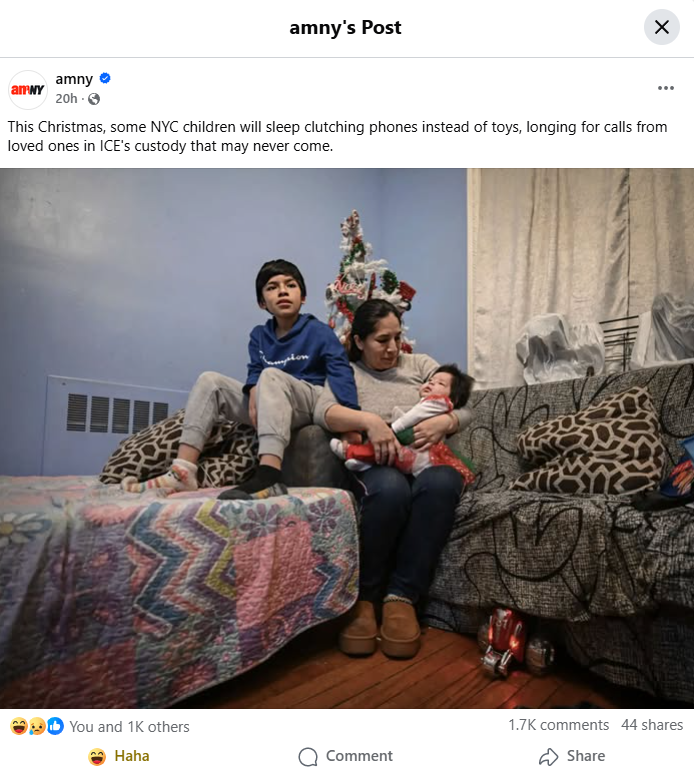
    A common pattern on social media is the use of emotionally loaded imagery and language—often centered on children—to steer audiences toward a single conclusion: that unlawful entry into the United States should be treated primarily as a “human rights issue,” while key legal and policy context is minimized or omitted. One example is the type of post that portrays children “clutching” phones while waiting for calls from parents who entered or remained in the country unlawfully.

    This approach can influence public perception by encouraging a reaction driven by empathy alone—without addressing the broader reality that many people from the same countries of origin are attempting to immigrate through lawful channels, often waiting years and complying with extensive requirements.

    Legal Immigration vs. Unlawful Entry: What the Numbers Show

    To evaluate the situation honestly, it helps to compare the scale of lawful immigration with the scale of irregular/unauthorized encounters and the size of the unauthorized population residing in the country.

    1) Lawful Permanent Residents (“Green Cards”)

    2) Unauthorized/Irregular Encounters

    • Analyses of government data have described millions of encounters during the early-2020s surge; for example, a nonpartisan data group reported nearly 11 million “unauthorized border encounters” between October 2019 and June 2024. (USAFacts: Unauthorized Immigration Data Overview)
    • A policy analysis organization reported that FY 2024 saw roughly 2.3 million encounters at all U.S. borders (including a notable number at the U.S.-Canada border), reflecting the magnitude of irregular arrivals and enforcement contacts. (Migration Policy Institute: FY2024 Border Encounters)

    3) Unauthorized Population Residing in the U.S.


    Why This Matters: Fairness to Legal Immigrants and to Genuine Refugees

    The People Doing It “The Right Way” Absorb the Cost

    One of the least discussed consequences of normalizing unlawful entry through emotional media framing is what it does to those attempting to immigrate legally. Lawful immigration often requires years of paperwork, fees, background checks, interviews, travel, and strict compliance with visa terms—under a system with caps and queues. (American Immigration Council)

    When unlawful entry is portrayed as morally equivalent—or morally superior—to legal immigration (because it comes packaged as a viral “human interest” story), it signals to law-abiding applicants that the rules are optional, that patience is for “suckers,” and that the legal process can be bypassed with fewer immediate consequences. That perception is corrosive to any system built on equal treatment and orderly procedure.

    Genuine Refugees Can Be Crowded Out by Volume and Backlogs

    Refugee and asylum systems are intended to protect people fleeing persecution, war, or severe threats. When the volume of irregular arrivals overwhelms administrative capacity, it can slow adjudications and increase incentives to treat every claim as part of a mass flow rather than an individualized humanitarian determination. In that environment, the credibility of the entire protection framework can erode—harming the very people it was built to help.

    Economic and Social Pressures That Don’t Fit Into Viral Posts

    Viral content rarely discusses downstream impacts: local housing strain, school enrollment spikes, pressure on emergency rooms and municipal budgets, and the perception that public resources and services must expand rapidly without the deliberate planning that citizens typically expect from government. Whether one supports higher immigration levels or lower levels, it is not “anti-human” to acknowledge that infrastructure and public budgets are not infinite.

    It also rarely discusses the economic reality that many migrants send remittances abroad, and that large-scale, unmanaged migration can create political tension among taxpayers who feel they are subsidizing systems that were never designed for uncontrolled inflows.

    The Core Question: Does the Rule of Law Still Mean Anything?

    The United States has a legal immigration system. It can be reformed, expanded, streamlined, or tightened—but it exists to reflect democratic choices and sovereign control. When public consent is engineered through emotionally manipulative content rather than honest comparisons and real numbers, citizens are conditioned to accept outcomes they never voted for.

    If America is pushed into a posture where “human rights” rhetoric is used to blur the line between lawful immigration and unlawful entry, the long-term result is predictable: more disorder, more backlash, and more hardship for legal immigrants and genuine refugees alike.

    Sources (Quick Links)

  • Pain Patient Protection and Clinical Autonomy Act of 2025

    SECTION 1. SHORT TITLE

    This Act may be cited as the “Pain Patient Protection and Clinical Autonomy Act of 2025.”


    SECTION 2. CONGRESSIONAL FINDINGS AND PURPOSE

    (a) Findings

    Congress finds the following:

    1. Millions of patients in the United States suffer from acute and chronic pain arising from medical conditions including cardiovascular disease, cancer, neurological injury, post-surgical recovery, and congenital disorders.
    2. The practice of medicine requires individualized clinical judgment based on patient-specific risk–benefit analysis, informed consent, and evidence-based standards of care.
    3. In response to concerns regarding misuse of prescription opioids, healthcare institutions and regulatory bodies implemented broad, categorical restrictions that, in many cases:
      • Supplanted individualized medical judgment;
      • Resulted in undertreatment or denial of pain care; and
      • Caused foreseeable harm to patients with legitimate medical need.
    4. Certain policies denied or restricted pain treatment based solely on lawful conduct, including participation in state-authorized medical cannabis programs.
    5. Cannabis has been recognized by the federal government as having accepted medical use and therapeutic value pursuant to its rescheduling under the Controlled Substances Act.
    6. Public health objectives related to substance misuse must be pursued without infringing upon patient rights, medical ethics, or the integrity of clinical decision-making.
    7. The conflation of law enforcement priorities with medical treatment decisions has undermined patient trust and physician autonomy.

    (b) Purpose

    The purposes of this Act are:

    1. To protect patients from categorical denial of pain treatment unrelated to individualized medical necessity;
    2. To restore and safeguard clinical discretion in pain management;
    3. To prohibit discrimination against patients based on lawful medical therapies;
    4. To separate healthcare delivery from criminal-law enforcement functions; and
    5. To establish enforceable patient protections consistent with federal law.

    SECTION 3. DEFINITIONS

    For purposes of this Act:

    1. “Pain patient” means an individual experiencing acute or chronic pain arising from a diagnosed medical condition.
    2. “Covered healthcare entity” means any hospital, integrated delivery system, insurer, pharmacy benefit manager, or healthcare organization receiving federal funds or participating in Medicare, Medicaid, or federally regulated insurance markets.
    3. “Clinician” means a physician or other licensed healthcare professional authorized to prescribe controlled substances under federal and state law.
    4. “Individualized clinical determination” means a documented, patient-specific medical decision based on:
      • Medical history;
      • Contraindications;
      • Available treatment alternatives; and
      • A reasoned risk–benefit analysis.
    5. “Lawful medical cannabis use” means the use of cannabis in compliance with applicable state or federal law.
    6. “Categorical exclusion” means any policy or practice that denies or restricts pain treatment solely on the basis of a non-clinical factor without individualized assessment.

    SECTION 4. PROHIBITION ON CATEGORICAL DENIAL OF PAIN CARE

    (a) General Rule

    No covered healthcare entity may deny, restrict, or condition access to pain treatment through a categorical exclusion that is not based on an individualized clinical determination.


    (b) Prohibited Bases for Categorical Exclusion

    A covered healthcare entity shall not deny or restrict pain treatment solely on the basis of:

    1. A positive test for tetrahydrocannabinol (THC);
    2. Participation in a lawful medical cannabis program;
    3. The use of a lawful, non-impairing medical therapy unrelated to the prescribed treatment;
    4. Institutional risk-avoidance policies that override clinician judgment without individualized review.

    SECTION 5. PRESERVATION OF CLINICAL DISCRETION

    (a) Affirmation of Medical Judgment

    Nothing in this Act shall be construed to require a clinician to prescribe any specific medication.

    (b) Protection of Discretion

    A clinician shall not be disciplined, penalized, or subject to adverse action solely for prescribing opioid analgesics or other pain treatments when:

    1. The prescription is medically indicated;
    2. An individualized clinical determination is documented; and
    3. Applicable monitoring and safety standards are followed.

    SECTION 6. PAIN PATIENT BILL OF RIGHTS

    Each pain patient receiving care from a covered healthcare entity shall have the right to:

    1. An individualized pain assessment;
    2. Access to evidence-based treatment options;
    3. Informed consent regarding risks and alternatives;
    4. A written explanation for any denial or limitation of pain treatment;
    5. A timely internal review of adverse decisions;
    6. Referral for an independent second opinion where clinically appropriate;
    7. Continuity of care without abrupt or non-consensual discontinuation absent medical necessity.

    SECTION 7. TRANSPARENCY AND REVIEW REQUIREMENTS

    (a) Policy Disclosure

    Covered healthcare entities shall publicly disclose pain-management policies that affect access to care.

    (b) Documentation

    Any denial or restriction of pain treatment shall be documented with specific clinical justification.

    (c) Appeals Process

    Covered entities shall establish an internal appeals process and provide access to external review mechanisms.


    SECTION 8. SEPARATION OF MEDICAL CARE AND LAW ENFORCEMENT

    (a) Non-Delegation

    Clinical decision-making shall not be delegated to, dictated by, or conditioned upon directives from law enforcement agencies.

    (b) Limitation on Enforcement Influence

    No federal agency may condition funding, enforcement discretion, or regulatory approval on the adoption of categorical pain-treatment exclusions.


    SECTION 9. SAFE HARBOR FOR CLINICIANS

    A clinician who complies with this Act shall be deemed to be acting within the scope of professional practice for purposes of federal law, including enforcement under the Controlled Substances Act.


    SECTION 10. ENFORCEMENT

    (a) Administrative Enforcement

    The Secretary of Health and Human Services shall promulgate regulations to enforce this Act.

    (b) Private Right of Action

    Any person aggrieved by a violation of this Act may bring a civil action for:

    • Declaratory relief;
    • Injunctive relief; and
    • Reasonable attorney’s fees.

    SECTION 11. PREEMPTION AND CONSTRUCTION

    (a) Minimum Federal Standard

    This Act establishes minimum federal protections and does not preempt state laws providing greater patient protections.

    (b) Rule of Construction

    Nothing in this Act shall be construed to expand criminal liability or mandate prescribing.


    SECTION 12. EFFECTIVE DATE

    This Act shall take effect 30 days after enactment.

  • Faith-Based Self-Defense and Liability Protection Act of 2025

    A BILL
    To affirm the constitutional rights of faith-based organizations to establish internal safety policies and to protect such organizations from civil or criminal liability arising solely from lawful firearm possession by members on church premises.


    Section 1. Short Title

    This Act may be cited as the “Faith-Based Self-Defense and Liability Protection Act of 2025.”

    Section 2. Findings

    Congress finds that—

    1. The First Amendment guarantees the free exercise of religion, including the right of congregations to worship in safety.
    2. The Second Amendment secures the individual right to keep and bear arms for lawful purposes, including self-defense.
    3. Religious assemblies have been targets of violent attacks; reasonable safety measures are essential to preserving life.
    4. Faith-based organizations should not face civil or criminal penalties when members lawfully possess firearms for personal protection on premises used for worship.
    5. Nothing in this Act compels any faith-based organization to adopt or reject firearm policies inconsistent with its doctrine.

    Section 3. Definitions

    (a) Faith-based organization—any church, synagogue, mosque, temple, or other religious assembly recognized under section 501(c)(3) of the Internal Revenue Code.
    (b) Lawful firearm possession—possession, carrying, or use of a firearm consistent with all applicable federal, state, and local laws.
    (c) Premises—real property owned, leased, or controlled by a faith-based organization and used primarily for religious worship or fellowship.

    Section 4. Civil Liability Limitation

    (a) No faith-based organization or its officers shall be liable in any civil action for damages, injury, or death arising solely from the lawful possession or defensive use of a firearm by a member, attendee, or employee while on premises controlled by the organization.
    (b) Liability shall attach only upon clear and convincing evidence of gross negligence or willful misconduct by the organization.
    (c) Adoption of, or failure to adopt, a written firearm or safety policy shall not by itself create a duty or a basis for liability.

    Section 5. Criminal Liability Limitation

    (a) No pastor, minister, priest, rabbi, imam, elder, or governing officer of a faith-based organization shall be criminally liable under federal law solely because an individual lawfully possesses a firearm on premises controlled by the organization.
    (b) This section shall not apply to unlawful possession, discharge, or use of a firearm.

    Section 6. Rule of Construction

    (a) Nothing in this Act shall be construed to—
     (1) preempt state or local laws providing greater protections;
     (2) compel any religious organization to permit firearms contrary to its beliefs; or
     (3) limit lawful prosecution of criminal conduct involving firearms.

  • Commercial Carrier Safety and Accountability Enhancement Act of 2025

    Draft Bill

    A BILL
    To amend Title 49 of the United States Code to enhance safety, accountability, and professional standards among common carriers and holders of Commercial Driver’s Licenses (CDLs), and for other purposes.


    Section 1. Short Title

    This Act may be cited as the “Commercial Carrier Safety and Accountability Enhancement Act of 2025.”


    Section 2. Findings and Purpose

    Congress finds that:

    1. Commercial motor vehicle operators perform a critical role in interstate commerce and public safety.
    2. Enhanced standards of mental, technical, and behavioral fitness are necessary to reduce highway fatalities and improve public trust in the transport sector.
    3. Accountability of carriers and companies must be strengthened to ensure civil and criminal liability attaches to negligent acts and omissions.
    4. Compensation of carriers must reflect the increased regulatory and safety burdens placed upon them.

    Section 3. Amendments to Title 49, United States Code

    (a) English Proficiency

    49 U.S.C. § 31310 is amended by adding:

    (f) Immediate English Proficiency Testing. — The Secretary of Transportation shall require all applicants for a commercial driver’s license (CDL), regardless of immigration status, to demonstrate English language proficiency sufficient to communicate with enforcement officials, understand traffic signs, and comply with federal regulations.


    (b) Mental and Psychological Screening

    49 U.S.C. § 31310 is amended by inserting after subsection (f):

    (g) Mental Health Screening.
    (1) Each CDL applicant shall undergo a comprehensive psychological and mental health evaluation at the time of application.
    (2) Any diagnosis of disorders likely to manifest in violence, sociopathy, or impaired judgment shall disqualify the applicant.
    (3) CDL holders shall undergo periodic psychological re-evaluations not less than twice annually.
    (4) A CDL holder disqualified due to subsequent mental health deterioration after five or more consecutive years of active service shall be afforded presumptive eligibility for Social Security Disability Insurance (SSDI).


    (c) Safety and Technical Proficiency

    49 U.S.C. § 31305 is amended by adding:

    (c) Technical Proficiency Examinations. — The Secretary shall establish immediate and comprehensive safety and technical skill proficiency testing as a prerequisite for CDL issuance.


    (d) Drug and Criminal Background Screening

    49 U.S.C. § 31306 is amended to read:

    (1) Randomized Quarterly Drug Testing. — All CDL holders shall be subject to a minimum of four randomized drug tests per twelve-month period, with no less than two months between tests.
    (2) Zero Tolerance. — A first positive drug test, verified instance of road rage, or violent conduct while operating a commercial vehicle shall result in permanent disqualification from CDL eligibility.
    (3) Criminal Background Checks. — Prior felony convictions for crimes evidencing disregard for human life, including but not limited to vehicular manslaughter, aggravated assault, arson, armed robbery, and major narcotics trafficking, shall disqualify applicants from CDL eligibility.


    (e) Company Accountability

    49 U.S.C. § 31132 is amended by inserting:

    (j) Carrier Liability. — Each trucking company engaged in interstate commerce shall be subject to both civil and criminal liability for negligent acts or omissions of its employed carriers when such acts occur within the scope of employment.


    (f) Point System for Infractions

    A new section, 49 U.S.C. § 31311a, is added:

    § 31311a. Carrier Infraction Point System.
    (a) The Secretary shall establish a uniform, nationwide CDL point system to assess accountability for infractions not rising to immediate CDL disqualification.
    (b) Points shall be weighted based on severity, number of persons affected, extent of injuries, amount of property damage, and repetition of similar infractions.
    (c) Accumulation of points above thresholds established by regulation shall result in CDL suspension or permanent disqualification.


    (g) Compensation Standards

    A new section, 49 U.S.C. § 31508a, is added:

    § 31508a. Minimum Wage for Carriers.
    (a) Each State shall establish a minimum compensation standard for carriers domiciled within that State, based on cost-of-living indexes and the State Consumer Price Index (CPI).
    (b) Such rates shall be reviewed by the Secretary for adequacy and equity.
    (c) Compensation shall proportionally reflect the heightened safety, accountability, and professional requirements imposed under this Act.


    (h) Restrictions on Foreign Nationals and Foreign Companies

    [Note: Likely unconstitutional / in conflict with trade treaties. Retained here in legislative style for completeness.]

    (1) No foreign national shall be issued a CDL unless naturalized as a United States citizen and at least five years have elapsed since naturalization.
    (2) No foreign-owned trucking company may be authorized to operate within the United States.


    (i) Enforcement and Funding Conditions

    49 U.S.C. § 31314 is amended by adding:

    (e) Withholding of Funds. — The Secretary shall withhold federal highway and transportation funds from any State that fails to implement the requirements of this Act.


    Section 4. Effective Date

    This Act shall take effect one year after the date of enactment.

  • Protected: Food Stamp Junk Food Ban

    This content is password-protected. To view it, please enter the password below.