How Americans Are Being Conditioned to Ignore the Rule of Law on Immigration
(This post discusses media framing, legal immigration, unlawful entry, and the consequences for people who follow the legal process and for those with legitimate refugee claims.)
The “Sob Story” Framing: Emotion First, Context Last
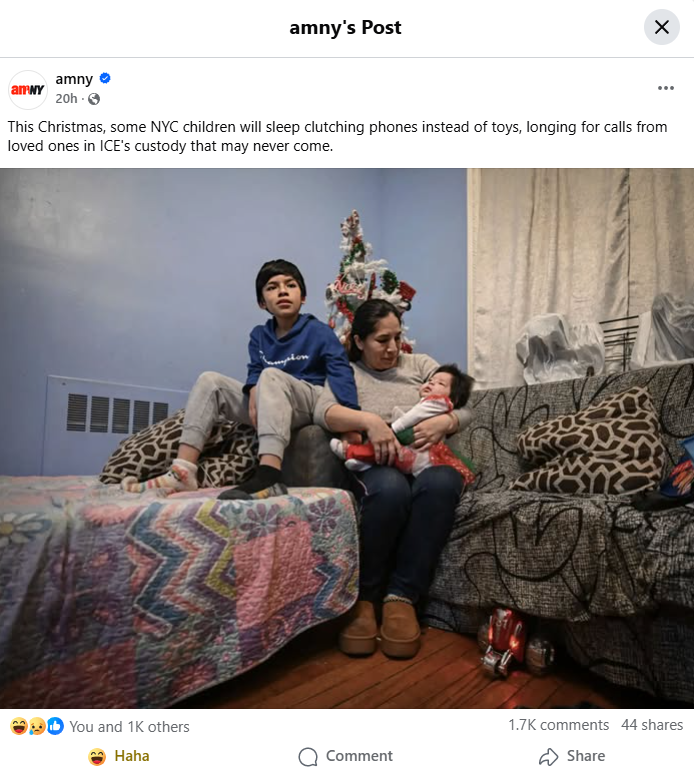
A common pattern on social media is the use of emotionally loaded imagery and language—often centered on children—to steer audiences toward a single conclusion: that unlawful entry into the United States should be treated primarily as a “human rights issue,” while key legal and policy context is minimized or omitted. One example is the type of post that portrays children “clutching” phones while waiting for calls from parents who entered or remained in the country unlawfully.
This approach can influence public perception by encouraging a reaction driven by empathy alone—without addressing the broader reality that many people from the same countries of origin are attempting to immigrate through lawful channels, often waiting years and complying with extensive requirements.
Legal Immigration vs. Unlawful Entry: What the Numbers Show
To evaluate the situation honestly, it helps to compare the scale of lawful immigration with the scale of irregular/unauthorized encounters and the size of the unauthorized population residing in the country.
1) Lawful Permanent Residents (“Green Cards”)
- In FY 2023, about 1.173 million people became lawful permanent residents (LPRs). (DHS OHSS: Lawful Permanent Residents: 2023 (PDF))
- The U.S. legal immigration system includes multiple categories (family, employment, humanitarian pathways, etc.) and is governed by statutory limits and processing steps. (American Immigration Council: How the U.S. Immigration System Works)
2) Unauthorized/Irregular Encounters
- Analyses of government data have described millions of encounters during the early-2020s surge; for example, a nonpartisan data group reported nearly 11 million “unauthorized border encounters” between October 2019 and June 2024. (USAFacts: Unauthorized Immigration Data Overview)
- A policy analysis organization reported that FY 2024 saw roughly 2.3 million encounters at all U.S. borders (including a notable number at the U.S.-Canada border), reflecting the magnitude of irregular arrivals and enforcement contacts. (Migration Policy Institute: FY2024 Border Encounters)
3) Unauthorized Population Residing in the U.S.
- Pew Research Center estimates the unauthorized immigrant population reached a record 14 million in 2023. (Pew Research Center (Aug 21, 2025))
- Pew also reports that more than 12 million of those unauthorized residents in 2023 either entered unlawfully or overstayed a visa. (Pew Research Center (details))
Why This Matters: Fairness to Legal Immigrants and to Genuine Refugees
The People Doing It “The Right Way” Absorb the Cost
One of the least discussed consequences of normalizing unlawful entry through emotional media framing is what it does to those attempting to immigrate legally. Lawful immigration often requires years of paperwork, fees, background checks, interviews, travel, and strict compliance with visa terms—under a system with caps and queues. (American Immigration Council)
When unlawful entry is portrayed as morally equivalent—or morally superior—to legal immigration (because it comes packaged as a viral “human interest” story), it signals to law-abiding applicants that the rules are optional, that patience is for “suckers,” and that the legal process can be bypassed with fewer immediate consequences. That perception is corrosive to any system built on equal treatment and orderly procedure.
Genuine Refugees Can Be Crowded Out by Volume and Backlogs
Refugee and asylum systems are intended to protect people fleeing persecution, war, or severe threats. When the volume of irregular arrivals overwhelms administrative capacity, it can slow adjudications and increase incentives to treat every claim as part of a mass flow rather than an individualized humanitarian determination. In that environment, the credibility of the entire protection framework can erode—harming the very people it was built to help.
Economic and Social Pressures That Don’t Fit Into Viral Posts
Viral content rarely discusses downstream impacts: local housing strain, school enrollment spikes, pressure on emergency rooms and municipal budgets, and the perception that public resources and services must expand rapidly without the deliberate planning that citizens typically expect from government. Whether one supports higher immigration levels or lower levels, it is not “anti-human” to acknowledge that infrastructure and public budgets are not infinite.
It also rarely discusses the economic reality that many migrants send remittances abroad, and that large-scale, unmanaged migration can create political tension among taxpayers who feel they are subsidizing systems that were never designed for uncontrolled inflows.
The Core Question: Does the Rule of Law Still Mean Anything?
The United States has a legal immigration system. It can be reformed, expanded, streamlined, or tightened—but it exists to reflect democratic choices and sovereign control. When public consent is engineered through emotionally manipulative content rather than honest comparisons and real numbers, citizens are conditioned to accept outcomes they never voted for.
If America is pushed into a posture where “human rights” rhetoric is used to blur the line between lawful immigration and unlawful entry, the long-term result is predictable: more disorder, more backlash, and more hardship for legal immigrants and genuine refugees alike.